.svg)


Holding grid standards through consecutive scarcity events.

Client
Texas Grid
Sector
Grid Stability
Scope
Firm capacity, ISO-settled
Region
Americas
Reserve margin fell faster than capacity could be built.
Consecutive heat events pushed reserve margin below the operating floor three times in a single summer. Interconnection queues ran years long, so any resource capable of holding the standard had to come from assets already sited inside the constraint.
Scarcity pricing rewarded availability that could be settled against, not forecast. A resource that missed its obligation during an event was worse than no resource at all.
A structured, modular framework.
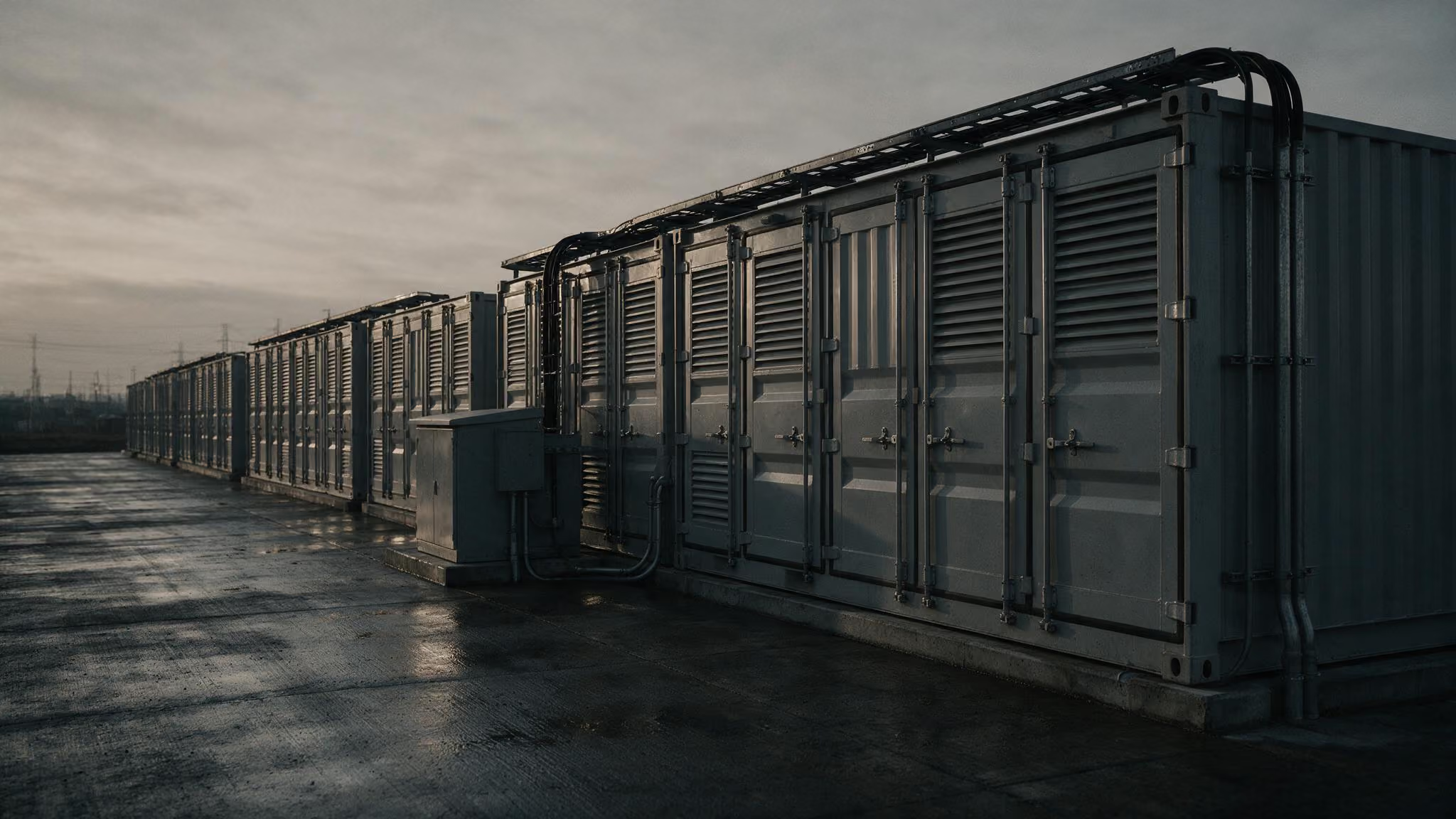
Capacity was sited where the transmission limit actually binds rather than where land was cheapest, then bid into the market it sits in as a firm resource with a published availability figure.
One control plane runs forecasting, state of charge, and dispatch against the ISO signal. The 24/7 desk carries the setpoint through the event rather than handing it back at the moment it matters.
From complexity to measurable impact.
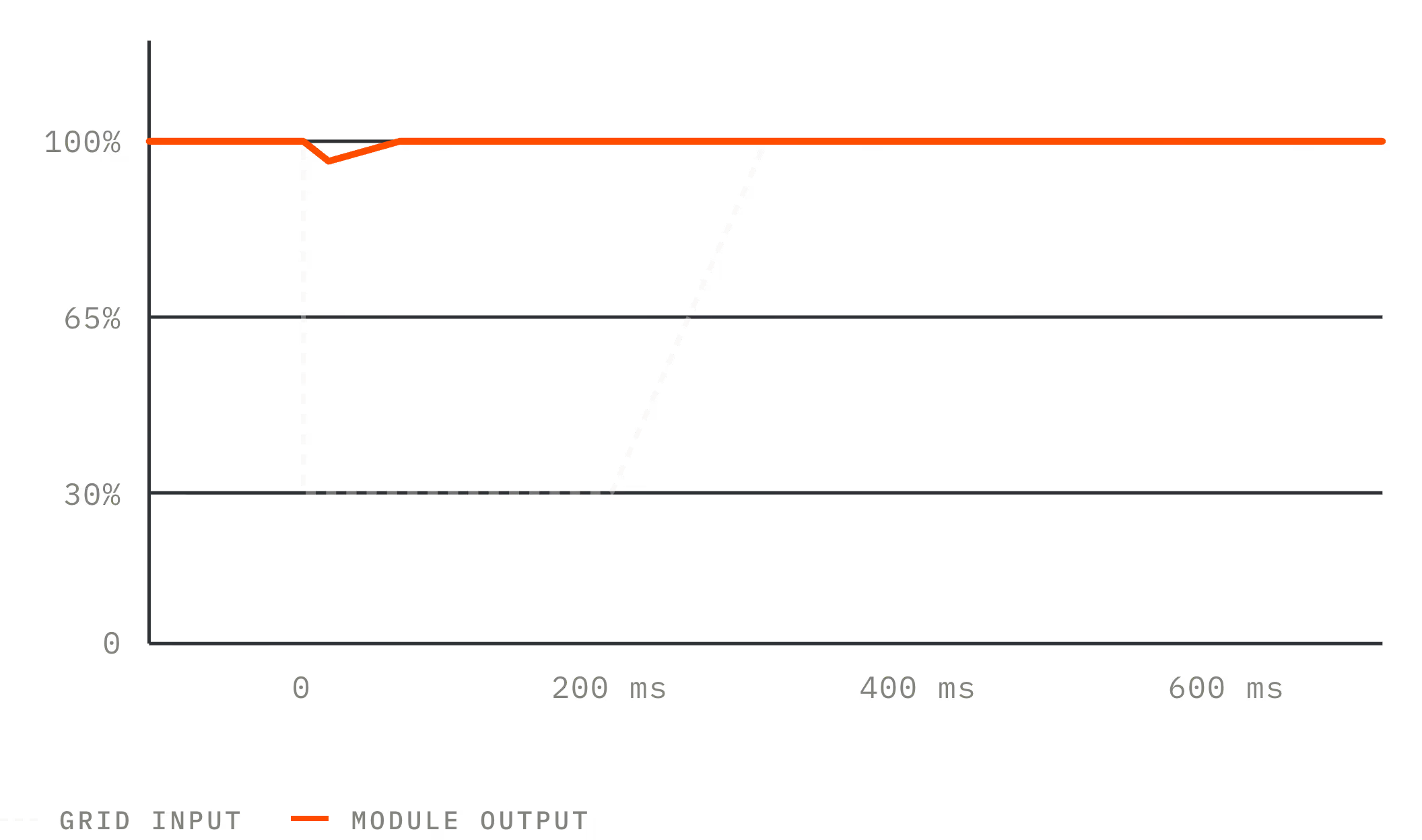
Seven scarcity events were served without a curtailment notice. Dispatch response landed in 240 ms against a 500 ms obligation, and availability was audited against ISO settlement data rather than our own telemetry.
Capacity that compounds.
The settlement record is now the basis for siting the next tranche. Where the constraint moves, the fleet follows, and the same control plane absorbs the new node without a parallel operations stack.