

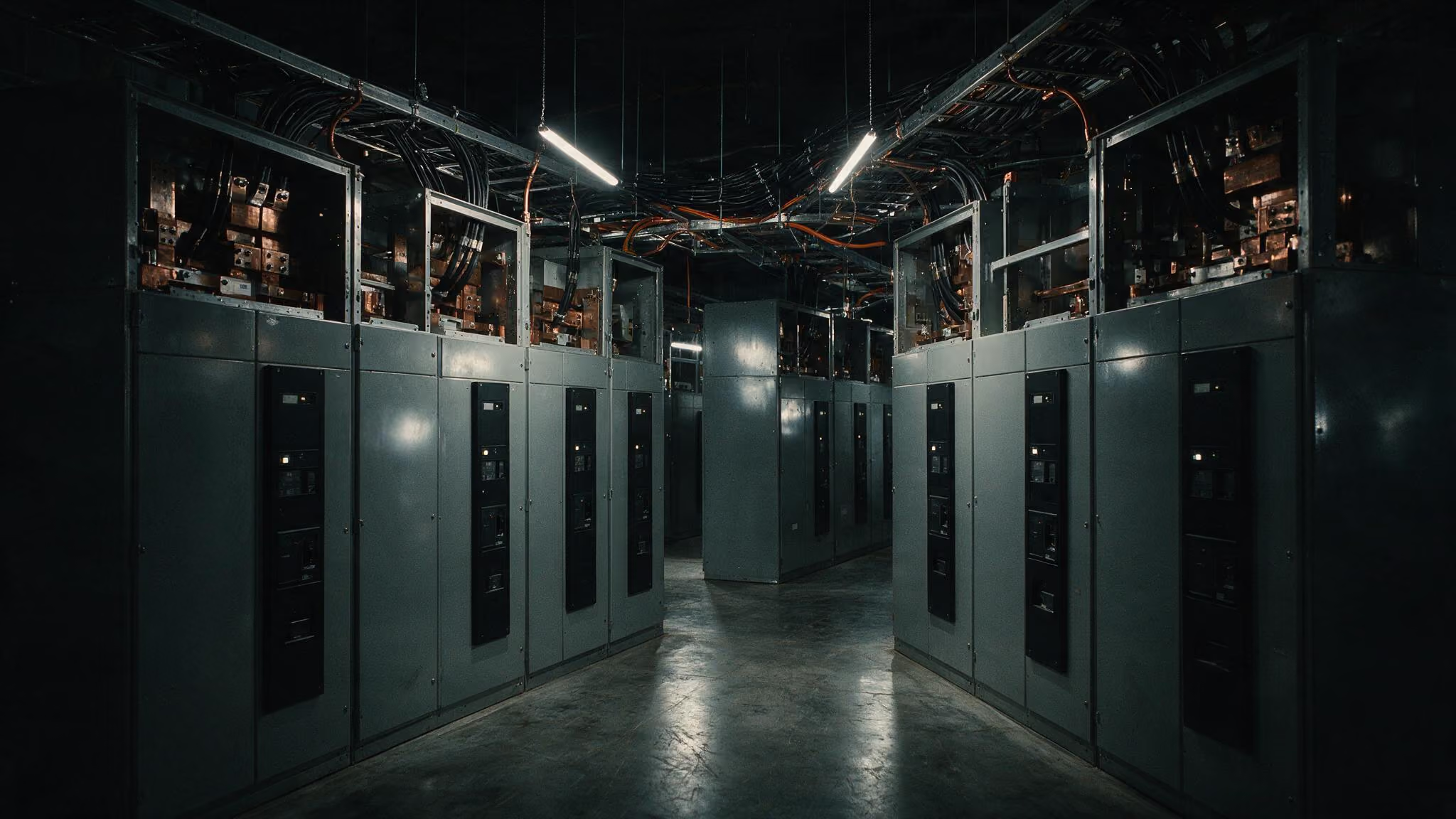
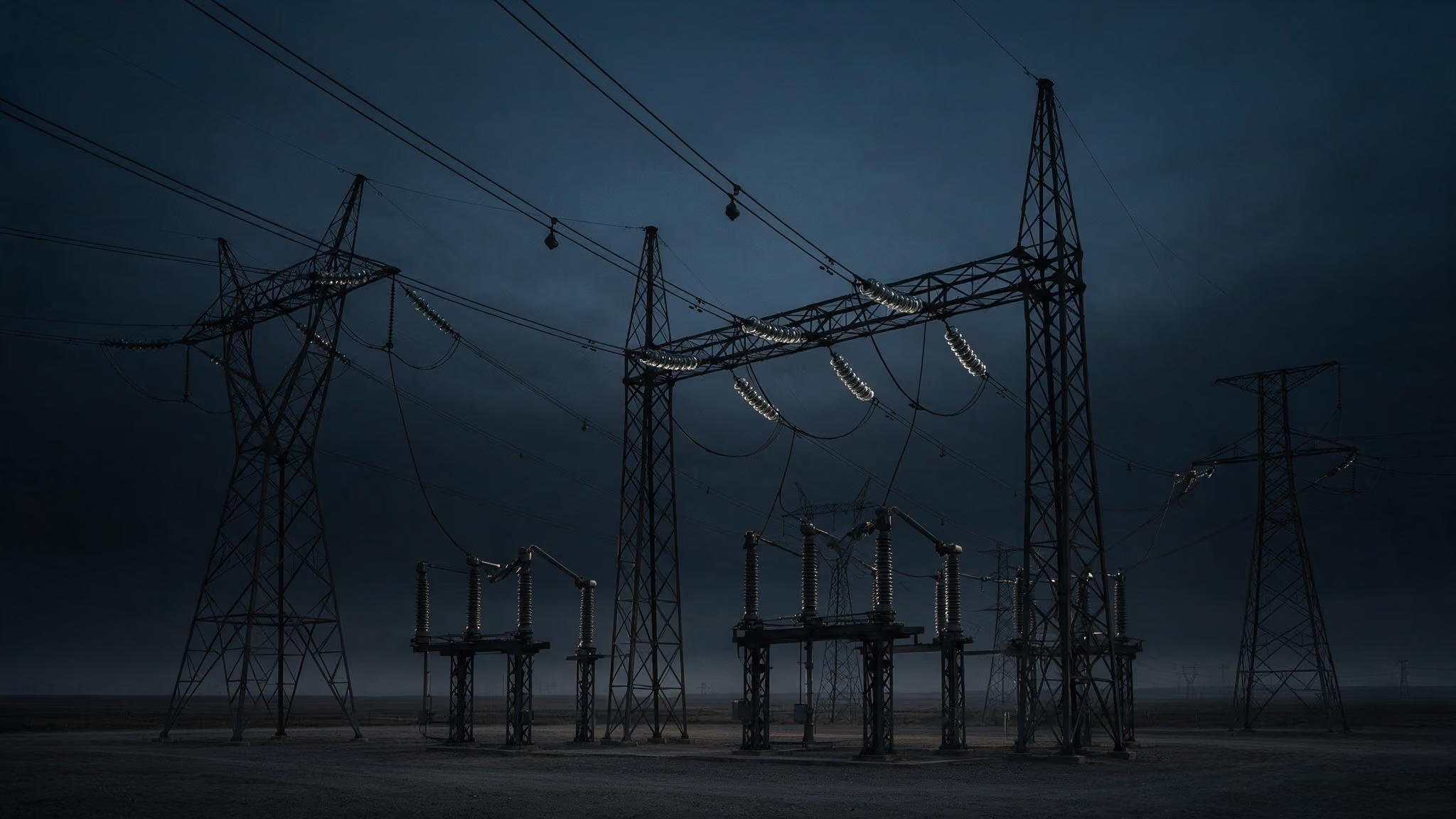
.svg)


Measured at the bus. Not modeled.
AI UPS™ sits between the utility and the load, absorbing volatility in both directions: grid-safe on the supply side, waveform-clean where the compute actually draws.
Four stages between the grid and the rack.
Utility intake
Power conversion
Dispatch & control
Load delivery
Hardware, control, and the redundancy between them.
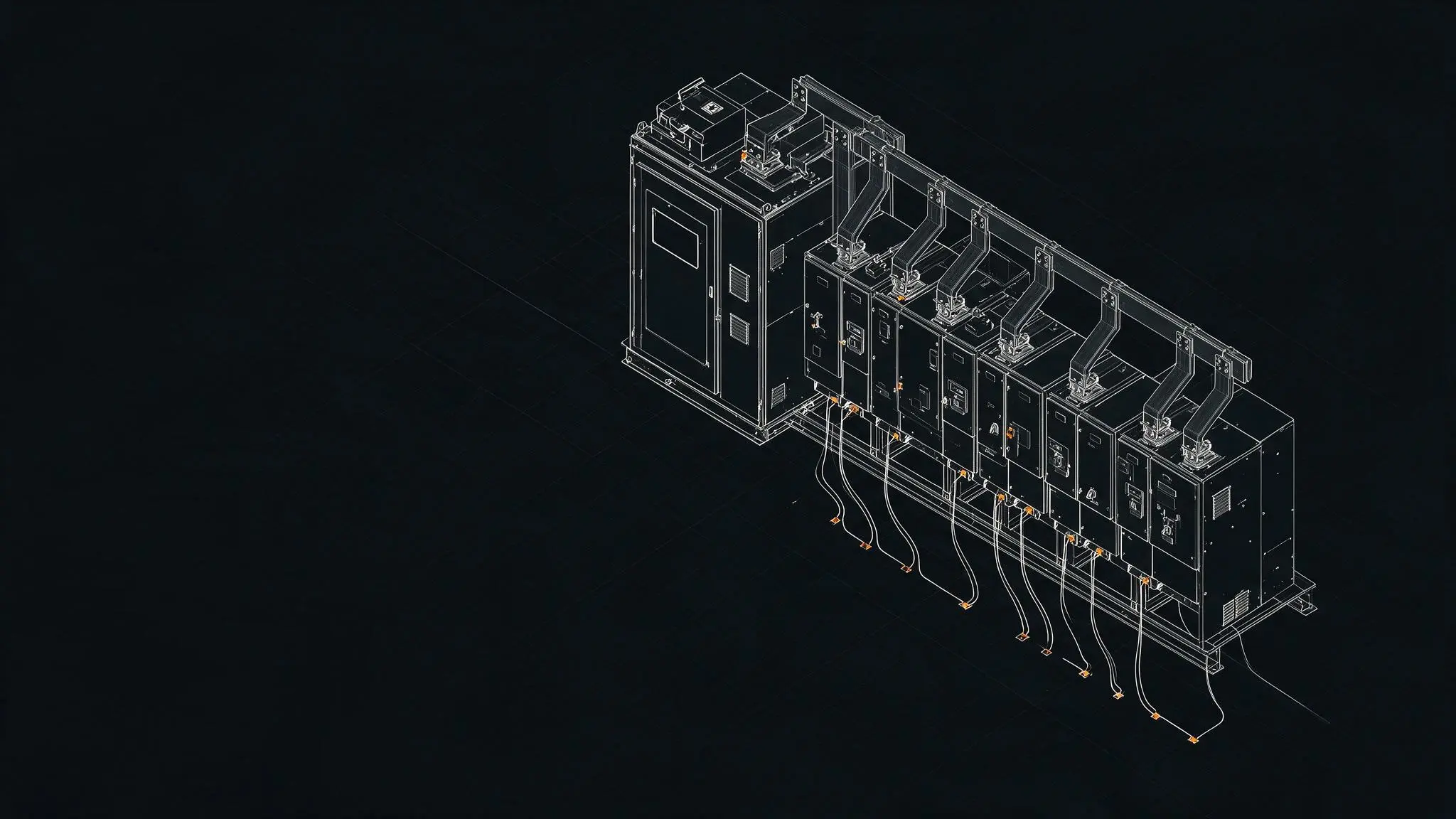
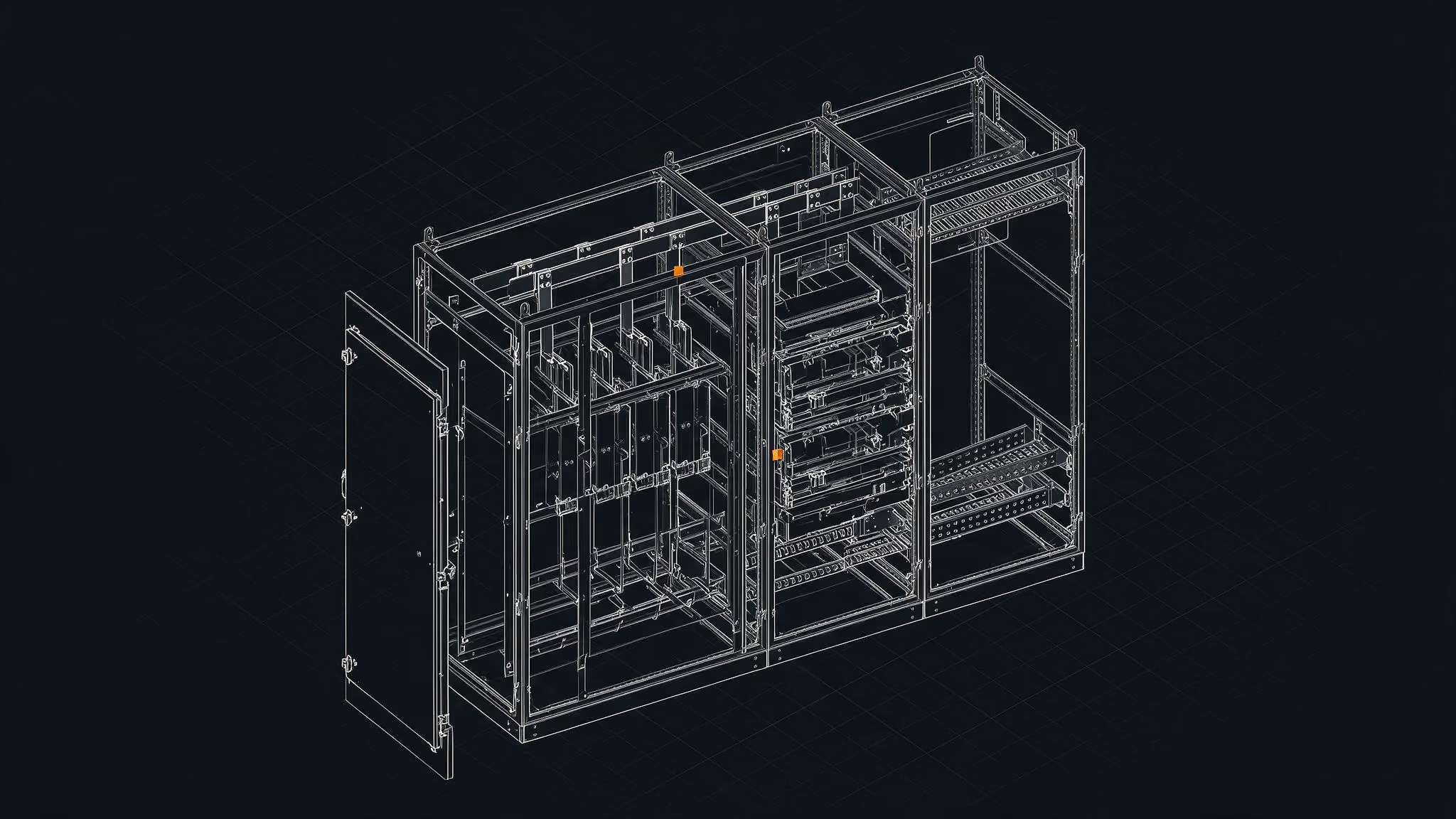
Medium-voltage modules, built on Tier-1 components.
Bankable hardware with a 20-year design life, assembled in the United States and FEOC compliant end to end. Owned manufacturing scales output to 10 GW per year, so supply is a schedule rather than a queue.
The intelligence layer behind every deployment.
Forecasting, dispatch, and market participation in one control plane, holding the setpoint while optimising operating cost against the ISO it sits in. Adapts across site, architecture, and market without a rebuild.
Fault tolerance designed in, not bolted on.
N+1 topology with static bypass means a single module failure is absorbed without a transfer the load can feel. Every transfer is logged and auditable. The dispatch desk cleared its last NERC CIP audit with zero findings.
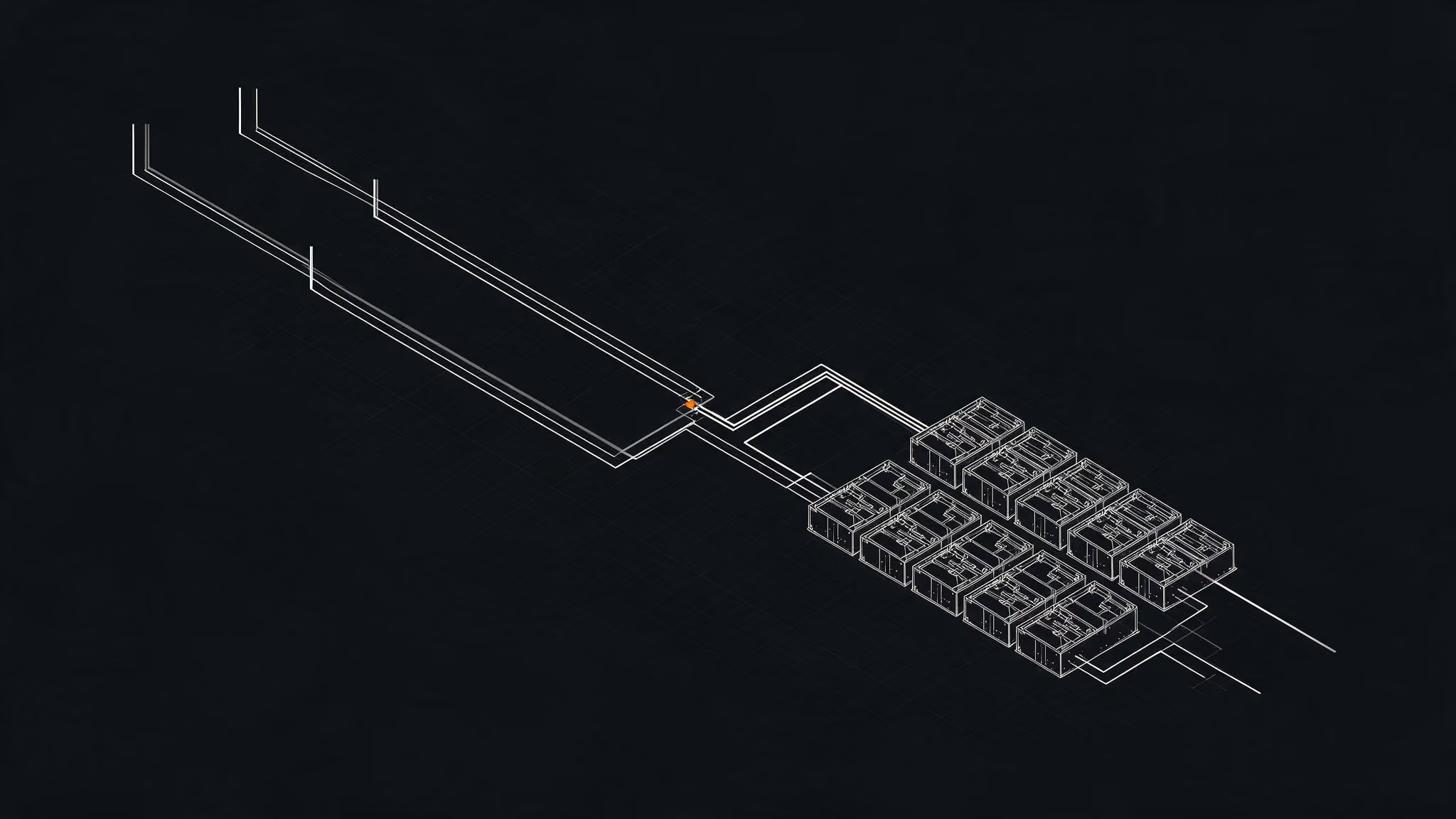
Every figure we publish is measured at the bus. Nothing here is modeled.
Simulation is where power engineering starts, not where it ends. Our fleet is instrumented at the point of interconnection and read quarterly under real load, so the numbers on this page are what the hardware did, not what the model promised.
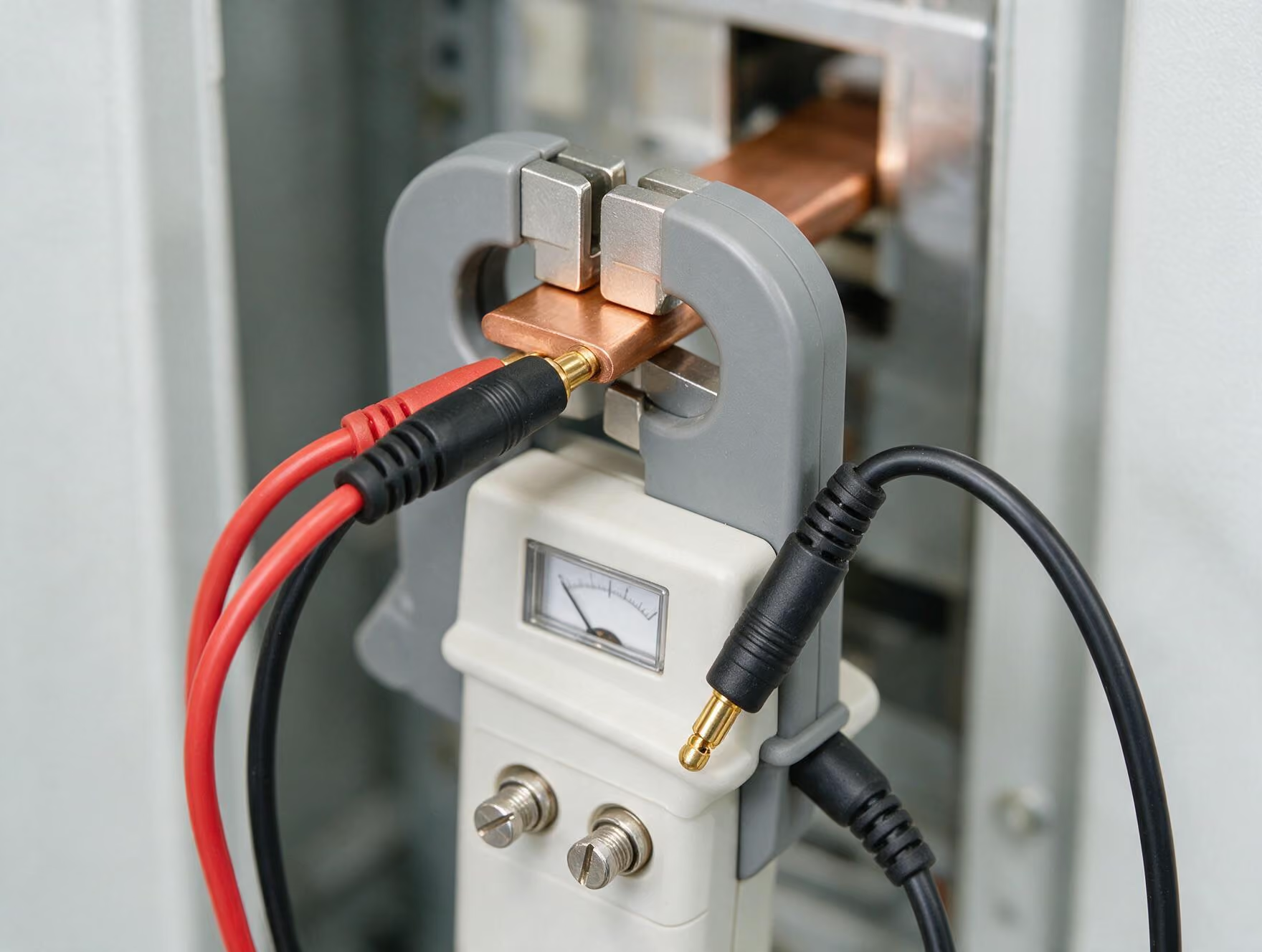
Read at the bus, under load, every quarter.
Four numbers carry the platform, and all four are instrumented rather than asserted. They are read at the point of interconnection on operating sites, under real load, and republished every quarter.
What the bus sees when the grid misbehaves.
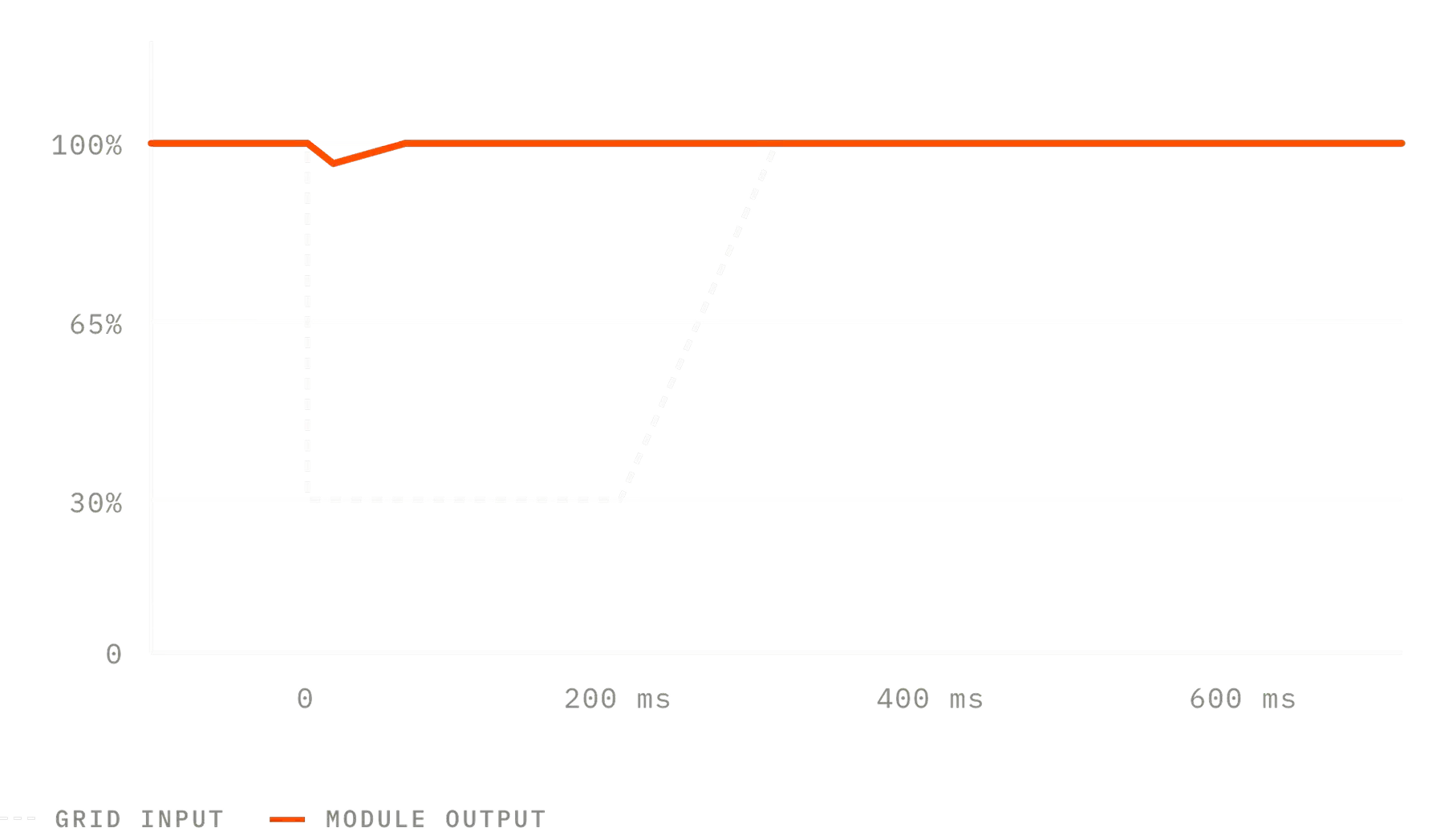
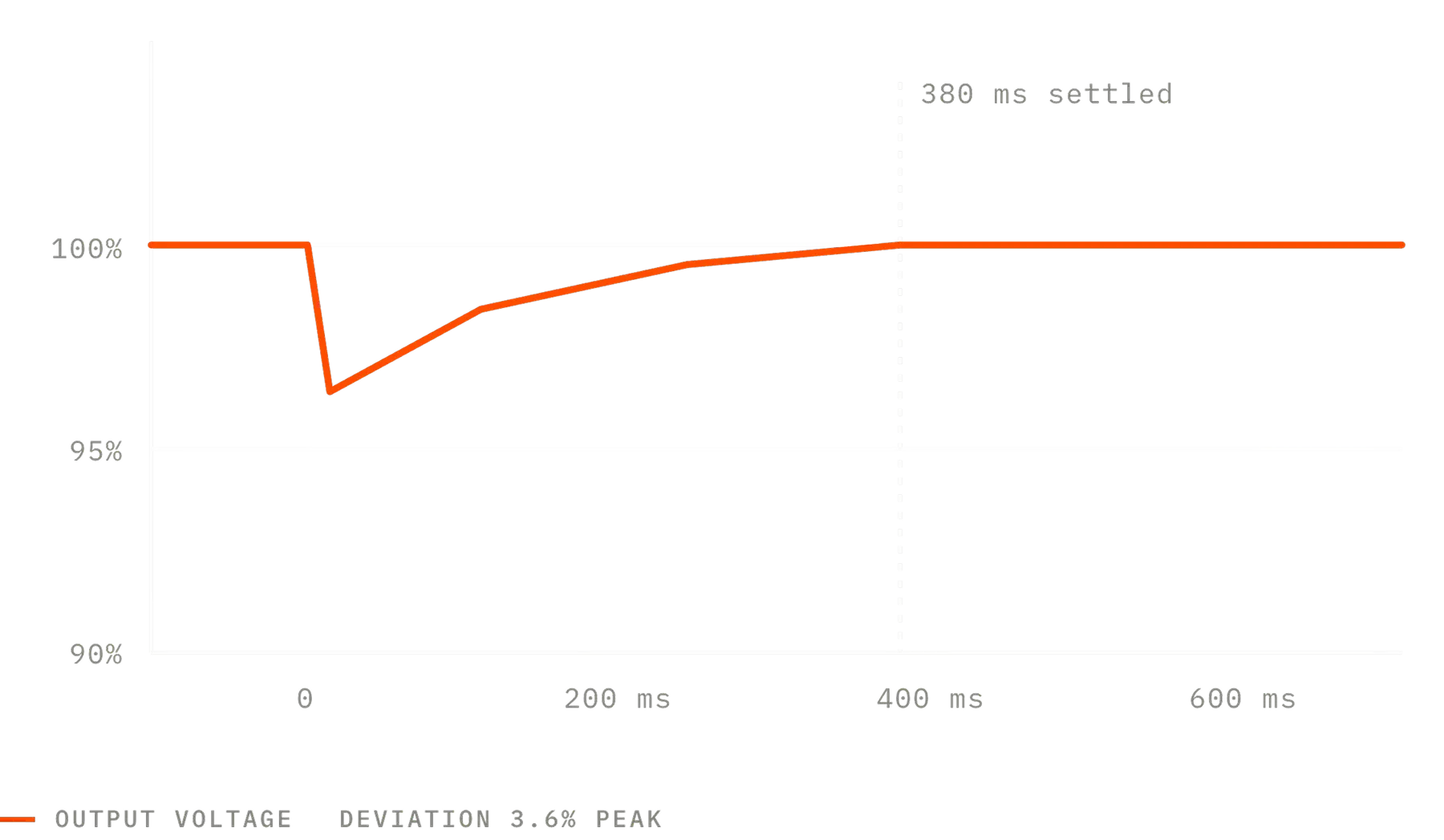
Technical specifications.
Figures apply to the current AI UPS™ revision. Site-specific values are issued with the assessment.