
.svg)


Texas approves grid standards to keep data centers online through scarcity events.
.avif)
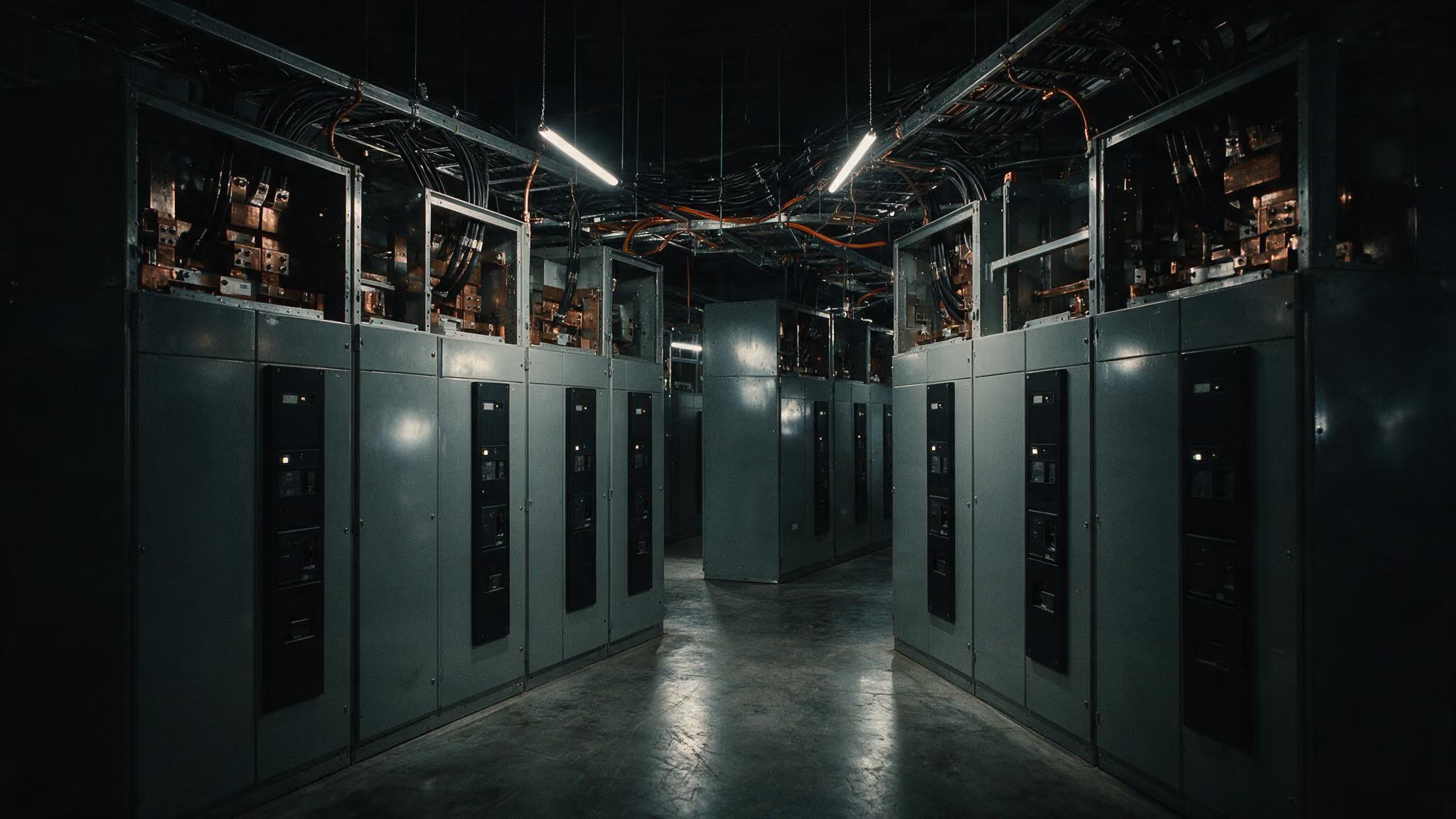
Regulators approved a ride-through standard for large interconnected loads, requiring campuses above 100 MW to hold through defined voltage and frequency excursions rather than tripping offline and shedding the disturbance back onto the grid.
The rule closes a gap that widened as compute load concentrated. A campus that trips during a scarcity event removes demand from the system, but it also removes the reactive support the system was counting on, and it does so at the moment the margin is thinnest.
What the standard actually requires
Loads must ride through a voltage excursion to 30% of nominal for 200 ms and return to full draw without a transfer the upstream network can detect. Frequency excursions carry a wider band and a longer window. Compliance is demonstrated on hardware at the point of interconnection, not modeled from a datasheet.
“Through the third event in nine days the resource was where it said it would be. Availability we could settle against, not a forecast.”
Ray Calder · Director of Reliability, Texas grid
Axiom Power operates 900 MW of dispatchable capacity inside the market and served seven scarcity events last summer without a curtailment notice, with dispatch response measured at 240 ms against a 500 ms obligation.
How the fleet already reads against it
AI UPS™ was designed to the harder case: absorb disturbance in both directions and correct waveform in 380 ms at P95. Fleet uptime reads 99.982% on a trailing twelve-month basis, weighted by capacity and measured at the bus. Nothing in the new standard changes the hardware; it changes what has to be published.
“The standard asks operators to prove what they claim. We have been publishing the method for four years.”
Wei Chen · Chief Technology Officer, Axiom Power
The rule takes effect for new interconnection agreements filed after the third quarter.
.avif)